Everything you need to know about driving a campervan in Australia
By Vroom Team • Reviewed 05 Aug 2026
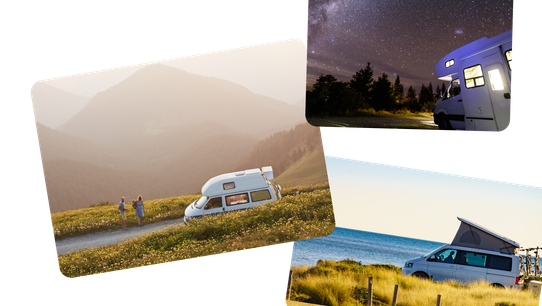
From the wide-open highways stretching across Australia’s vast Outback, to the magnificent coast from Sydney to Cairns, to the laid-back south-west corner of Western Australia, Australia is suitable for a campervan holiday. VroomVroomVroom can help you find campervan rentals in locations around the country, including popular branches in Brisbane, Melbourne, and Sydney. If you’re new to driving a campervan or motorhome, we’ve put together a quick guide to travelling in a campervan through Australia.
Which side of the road do Australians drive on?
As with India, Japan, New Zealand, and the United Kingdom, Australia abides by left-hand traffic laws, meaning vehicle steering wheels are the right-hand side of the vehicle and you drive on your left-hand side. The primary points to keep in mind are to always give way to your right, to leave a roundabout to your left, and to give way to all pedestrians and any vehicles whose path you’ll be crossing. If you’re a pedestrian, always check to your right before checking to your left.
Seat belts
In Australia, drivers and all passengers are required to wear seat belts at all times no matter how long the trip is. Seat belts must only be worn by one person at a time, and children under the age of seven are required to use an approved child restraint such as a baby seat or capsule of a booster seat.
Mobile phones
Australia has extremely strict laws regarding mobile phones and driving. It’s illegal for the driver to hold a mobile phone in their hand or have it resting on any part of their body while driving. This also applies if you are stopped in traffic and even if the phone is turned off. The only legal way for a driver to use a mobile phone is if it’s mounted on a cradle attached to the vehicle and does not obstruct the line of view of the driver. If you need to use your phone for an emergency, you must stop and park in an area where you will not endanger yourself or others in the area. Laws around mobile phones and cars are strictly enforced and the fines are high.
Campervan driving tips in Australia
If you’re new to campervanning, be sure to ask the branch staff to give you a complete walkthrough and explanation of all you need to know about your specific vehicle. This is particularly important because hiring a campervan requires proper understanding of responsibilities such as traffic and parking rules and wastewater treatment process. You may also read our campervan for beginners guide to give you an idea.
Driving any campervan needs the right licence — see what licence you need to drive a campervan as well as the requirements that should be provided with the licence.
While you're still at the depot after picking up your rental campervan, try to practise driving the vehicle to familiarise yourself before the long trip. Driving a 6-berth motorhome differs from a 2-berth camper — if you're still unsure which campervan to hire, see our guide to choosing the right campervan to drive.
Due to the fact that some campervans are much larger vehicles than cars, you need to be careful when turning. The larger the vehicle the harder it is to turn corners, so be sure to leave enough space around the vehicle when turning.
Before you get into your campervan make sure you know what the height of the vehicle is. When you’re going under bridges, make sure that the height of the campervan is less than the height of the bridge. Even if your GPS is telling you to go a certain way, still be cautious.
Driving up hills will require you to be in a lower gear. Stay in the slow lane so other cars and vehicles can pass you.
You will speed up more than you would in a car going down hills so make sure to maintain your speed limit and be aware of your surroundings.
When parking a campervan, given its huge size, always be sure to check your mirrors. If you’re not as confident to navigate the campervan when parking, ask a companion to get out and give you guidance. Unpredictable events can occur while you are travelling, so consider paying for insurance and roadside assistance. Campervans tend to have higher excess levels than some cars, so be sure to research your insurance options carefully.
You are expected to return the campervan in the same condition you picked it up, clean, fuel tank filled, and waste disposed, read more on returning a rental campervan to know the actions to take and what to expect with the inspection process.
Tolls
Tolls in Australia are concentrated in the cities of Brisbane, Melbourne, and Sydney. The renter is responsible for all toll payments so it’s a good idea to review the provider’s Terms and Conditions when hiring a campervan to avoid the double-payment of tolls. Most campervan hire companies fit their vehicles with e-Tags which will automatically cover toll fees as tolls in Australia are 100% electronic and do not accept cash. Renters will then be charged the fees along with other administrative fees and additional charges if applicable.
Where to stay when in a campervan? Campgrounds, parking, and sleeping in the van
There are three types of camping spots to choose from regardless of where you are driving your campervan in Australia: rest areas, state campgrounds, and normal campgrounds. If you have a tight budget, look for rest areas — also known as free campgrounds. If you prefer to camp more comfortably, choose either state campgrounds or normal campsites. Due to their size, not all campervans might fit in some parking spaces, make sure to park only on designated parking spots that can accommodate campervans and motorhomes. You can only stay overnight in designated campgrounds or campervan parks that allow overnight stays. It is prohibited to sleep in the campervan parked on the side of the road or in carparks unless during emergencies or fatigue management. Parking rules differ per locality so check with your rental company about the parking rules where you are travelling. Read more on parking rules to avoid getting a parking ticket.
Travel restrictions to certain parts of Australia
There are restrictions as to where you can take your hire vehicle. For example, many rental providers do not allow their campervans to be driven on Australia’s islands, beaches, or any unsealed roads, including parts of Cape York, Kakadu National Park, the Kimberley, and Savannah Way. Travel restrictions may also apply to alpine areas of New South Wales, Victoria, and Tasmania. Make sure to read your car hire company's Terms and Conditions for specifics, and if you’re unsure about whether you can drive on a certain road, please contact our customer care team to check.
Waste disposal
Hiring a campervan comes with the responsibility of proper waste management according to local council regulations to protect the environment. Campervan parks usually have dump point facilities where you can empty your rubbish and waste water. If there’s no campervan park on your route, keep an eye on the public dump points marked with a blue or brown sign. Read our campervan waste disposal guide for more information.
Road trip ideas
Whether you’re looking to travel the dramatic coastal views of the Great Ocean Road or want to drive deep into the mountains, valleys, and forests of the Great Alpine Road, there’s no shortage of campervanning road trip options to choose from.
For more campervan and motorhome travel advice, refer to VroomVroomVroom’s campervan rental information pages for more guides. You may check our special campervan offers and explore your campervan or motorhome options.
Important InformationWhen driving a rental campervan in Australia
Ask the rental company to walk you through the driving rules before you collect your keys and drive your rental vehicle in Australia. Make sure to check the driving conditions and any road restriction during your trip. Read your provider's Terms and Conditions, and keep a copy of your Rental Agreement containing important information, including contact numbers for roadside assistance.
About the author

Vroom Team
VroomVroomVroom’s writing team brings together decades of writing expertise to share their insights into travelling around Australia by rental car. Let our team help you get the most out of your rental car experience.