Book today, pay later, free cancellation
Coastal calm: Adelaide to the Yorke Peninsula
By Vroom Team • Reviewed 13 Jan 2026
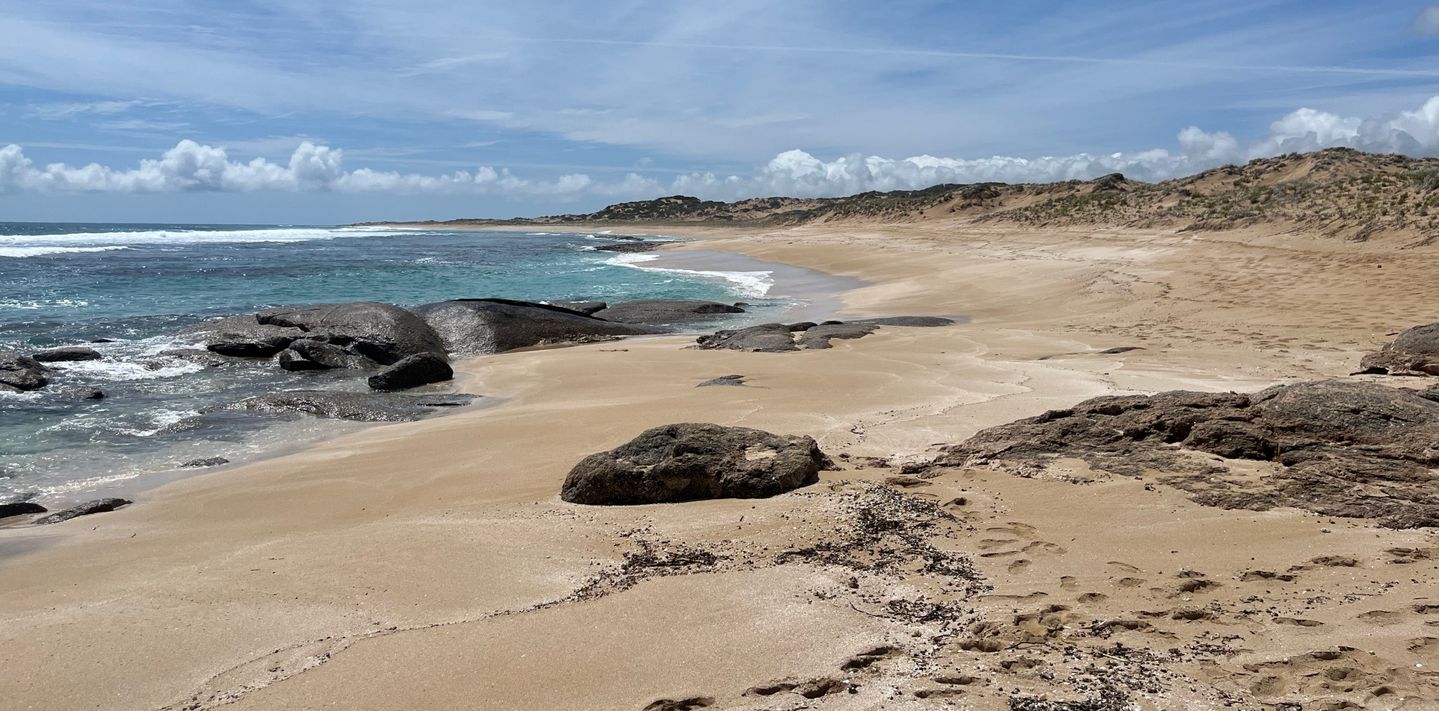
What better way to escape Adelaide’s hustle and bustle than in a rental car bound for the stunning Yorke Peninsula? Put that annual leave form in and swap city traffic for sea breeze on this slow and family-friendly road trip around South Australia’s “Yorke”. Over a relaxed week, trace the coastline of the traditional lands of the Narungga (Nharangga) people, from the quiet fishing towns, salt-crusted lakes, and a national park, through to spectacular cliff scenery, secluded beaches, and the sunny cafés and almost cosmopolitan vibe of Moonta.
Easily driven by car or campervan rented in Adelaide, this seven-day road trip is all about taking things slow and easy — we’ve deliberately made the drives short, with plenty of beach and café time in between, to make this a slow travel self drive holiday within easy reach of Adelaide. The peninsula’s relatively compact size means you can explore bush trails and cliff-top lookouts one day, then sip coffee beside the sea the next — all without rushing. This is what makes the Yorke Peninsula such a favourite among families, friends, and anyone needing time to unwind.
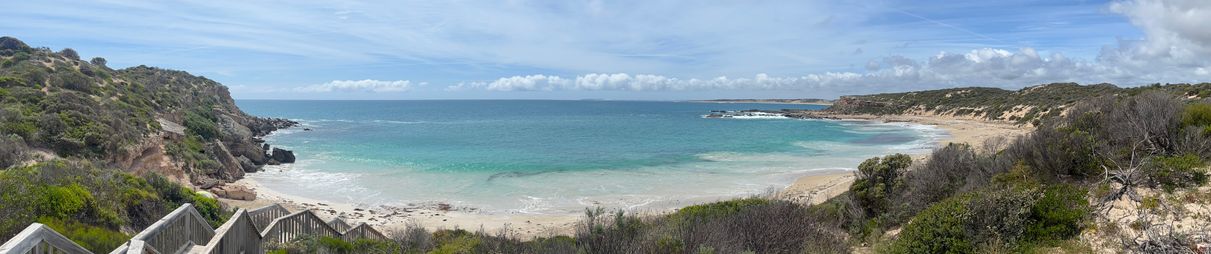
Adelaide to the Yorke Peninsula itinerary:
Day 1: Adelaide to Ardrossan
Day 2: Ardrossan to Edithburgh
Day 3: Edithburgh to Marion Bay
Day 4-5: Dhilba Guuranda–Innes National Park
Day 6: Marion Bay to Moonta
Day 7: Moonta to Adelaide
How long is the drive from Adelaide to the Yorke Peninsula?
With this Adelaide to the Yorke Peninsula itinerary having a total distance of just shy of 650 km, you could drive it in as little as a couple of days, but that would leave almost no time to soak up what this beautiful part of South Australia has to offer. Break it up over a week however, and you have a relaxing jaunt with not too much driving on any one day. Better still, spend two weeks doing the same!
| From | To | Distance & duration |
| Adelaide CBD | Ardrossan | 152 km & 1 hr 47 min |
| Ardrossan | Edithburgh | 79 km & 57 min |
| Edithburgh | Marion Bay | 88 km & 1 hr |
| Marion Bay | Moonta | 165 km & 1 hr 49 min |
| Moonta | Adelaide | 164 km 1 hr 57 min |
| Round trip | 648 km & 7 hr 30 min | |
All distances in kilometres, calculated on the shortest direct route by car with Google Maps. Distances and trip times correct as at 3 December, 2025.
Day 1: Adelaide to Ardrossan
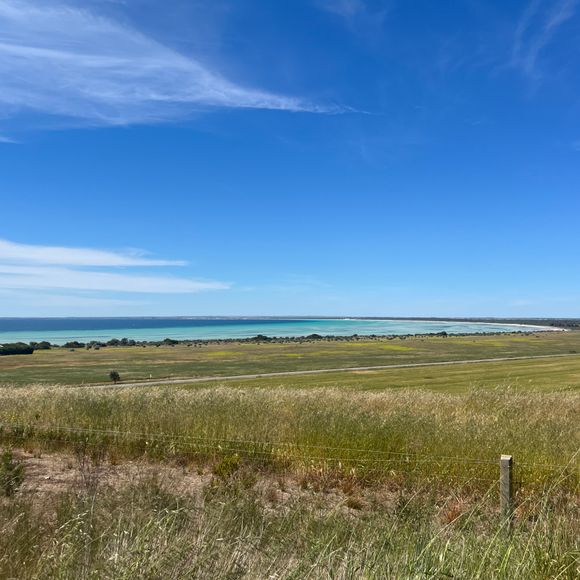
Leave Adelaide after breakfast and follow Highway 1 north for about an hour and a half, until you reach Federation Corner and signage acknowledging the traditional Narungga owners of where you’ll be spending the next week. As you head south, the farmland opens to wide coastal views, and after nine kilometres you can turn right to The Shed, a late 19th century woodshed pointing to the region’s recent history, then continue south for another 30 minutes to your first night of the trip.
A small port town perched on red cliffs overlooking its eponymous cove, Ardrossan’s jetty is the first port of call for most visitors, and it’s a great spot to stretch your legs after the morning drive. Built in the 1870s, the jetty is a popular fishing spot for blue swimmer crabs and squid, and even if you’re not a fisher, Ardrossan is a good spot to sample the local fare over a long and slow lunch. If you need to walk lunch off, take a stroll along Youngs Beach to Tiddy Widdy and back—in the late afternoon light, the ochre cliff’s glow serves as a taster of the scenery to come.
How far: The drive from downtown Adelaide to Ardrossan is 152 km.
Drive time: 1 hr 47 min
Day 2: Ardrossan to Edithburgh
It’s only a one hour drive to Edithburgh, so rest easy knowing there’s no need to rush. Head down the east coast, through wheat and barley fields and by tiny hamlets till that crystal blue sea appears on your left again. Along the way, stop at Port Vincent for morning tea and perhaps a quick paddle, or work along the beach a little to reach Port Vincent Cemetery — one of the only seaside graveyards we’ve come across in Australia.
Edithburgh sits near the peninsula’s southern tip and faces across to the tiny Troubridge Island and its tall red and white lighthouse. The town is known for its tidal pool, an inviting saltwater swimming spot just to the north of town. Bring your snorkelling gear if you have it, as you never know what small fish and rays may drift through.
Looking south, The Mosaic Trail runs for around three kilometres from Edithburgh south to Sultana Point and makes for a perfect way to spend the late afternoon (or early morning). Meanwhile,if you’ve got kids in tow, the brightly coloured Edithburgh Water Tower — it’s about one and a half kilometres due west to the centre of town — may be more interesting. Finish off the day with a 12 km drive south to the Troubridge Point Lighthouse — we just about guarantee you’ll have it to yourself for a clifftop sunset.
How far: The drive from Ardrossan to Edithburgh is 79 km.
Drive time: 57 min


Days 3: Edithburgh to Marion Bay
It’s about a two-hour drive from Edithburgh to Marion, but before you get too far, you’ll reach a chain of salt lakes whose shifting pink and white colours — the lakes boast imaginative names like White Lake and Pink Lake so there’s little chance you’ll mix them up — make them a favourite with photographers. From the lakes, press on for about 90 minutes to Marion Bay, this trip’s highlight and your base for the next three nights. Along the way you’ll reach Yorketown, pretty much the last town of any size you’ll be seeing for a while, so stock up on supplies — and petrol — here before settling in at Marion Bay.
Home to under 200 permanent residents, Marion Bay is a beautiful little coastal village that hasn’t started the migration to Byron Bay cultural status — or not yet at least. Small and welcoming, with a jetty ideal for sunset fishing or watching pelicans glide past, Marion Bay has an all-encompassing relaxing vibe to it. While you’ll be spending plenty of time in the national park in the coming days, do allow at least one unplanned day simply to relax — to read on the beach, chat with locals at the general store, or do nothing at all. That’s the spirit of the Yorke.
How far: The drive from Edithburgh to Marion Bay is 88 km.
Drive time: 1 hr
Day 4-5: Dhilba Guuranda–Innes National Park
Not long after Marion Bay you’ll reach the frontier of Dhilba Guuranda–Innes National Park, one of South Australia’s most striking coastal reserves. For the best chance at spotting the park’s ample wildlife and birds, set out early to explore Innes’s network of walking trails. The short Stenhouse Bay lookout walk is a great warm-up, leading to turquoise bays and towering cliffs, where dolphins and seals often frolic below — do keep an eye out for passing whales in season. For a longer adventure, the Thomson-Pfitzner Plaster Trail follows the old wooden railway line that runs from Inneston to Stenhouse Bay. As always, carry plenty of water and check conditions before you get going, as summer days can be extremely hot.
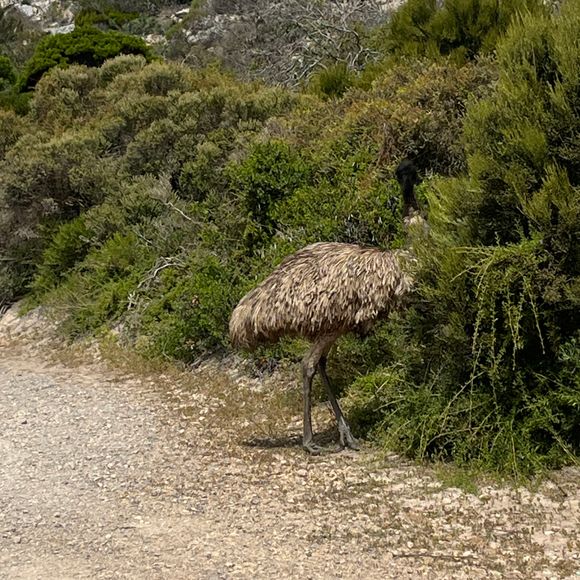
The park’s coastal strip is lined with bays and beaches, each with its own character. Pondalowie Bay is the surf hub, while nearby Shell Beach and Browns Beach offer calm, family-friendly shallows. Ethel Beach, named after a 1904 shipwreck whose rusted hull still lies on the low tide sand, makes a fascinating stop for kids (and the young at heart) when the tide is low — over 40 shipwrecks lay off the National Park’s coast. Between swims, keep an eye out for western grey kangaroos grazing near the dunes and emus striding across the track. Also keep your eyes peeled for rare tammar wallabies — they were re-introduced to the park after becoming extinct in South Australia. In the evenings, the night sky is brilliant — perfect for stargazing away from city lights.

Days 6–7: Marion Bay to Moonta
When you finally tear yourself away from Marion Bay, drive north to Moonta, roughly three hours away. Along with Kadina and Wallaroo, Moonta forms a part of the “Copper Coast” blending old mining heritage with modern seaside charm. The town centre has evolved into a lively café strip, and the scent of coffee and pasties is stronger than the salt air in these parts. Browse boutiques, wander the heritage walk, or visit the National Trust Museum to learn about the Cornish miners (evidenced through the historic cottages, and yes, pasties!) who helped build modern-day Moonta and its surrounds.
Should you reach your fill of café culture, Moonta Bay and Port Hughes lay just minutes from town, and are excellent spots for beach games, fishing or an afternoon swim. The long, shallow sandbars here are great for young children and early morning wanders alike. Alternatively take a sunset stroll out along Moonta’s jetty — keep an eye out for the shoals of squid lingering as you walk along, they’re a favourite among local fishers and more often than not grace dinner plates at local eateries. Towards the end of the jetty, note the netted off area for swimming, the net is there to keep the sharks out and the people in! On your final evening, enjoy dinner at one of the spots overlooking the water — an easy, celebratory way to finish the trip and prepare yourself for the drive back to the big smoke in Adelaide. Be sure to try the squid while you’re at it.
How far: The drive from Marion Bay to Moonta is 88 km.
Drive time: 1 hr 49 min
Driving tips
The full loop from Adelaide covers around 800 km, with no driving leg longer than three hours. All the main roads are sealed and well-signposted, though fuel stations can be spaced out in the southern sections — fill up when you can, with Yorketown being the last town with much in the way of supplies, including fuel.
While the main roads are all-weather sealed affairs, once you’re off the main thoroughfare, unsealed roads become more common. If you rented a car in Adelaide, be sure to check your rental car provider’s Terms and Conditions regarding unsealed roads. That aside, the Yorke Peninsula is largely accessible to a regular sedan, and while you probably won’t be needing a 4WD, a rental SUV would provide more comfort during a road trip such as this one.
Driving a campervan? The Yorke Peninsula is littered with camping grounds, and both powered and unpowered sites for campervans, making it ideal for a campervan road trip from Adelaide. There are remote beachside options as well as others with easy access to shops and cafés to choose from. In off-season booking ahead shouldn’t be necessary, but in summer, especially across long weekends and school holidays, booking in advance is prudent.
Regardless of the type of vehicle you’re driving, take particular care at dusk when kangaroos are enjoying their end-of-day hop—they can (literally) jump into your path in a blink of the eye. If you’re travelling in the summer, be sure to carry extra water and check total-fire-ban alerts before heading into the national park.


Best time to visit the Yorke Peninsula
Yorke Peninsula’s weather shines from October to April, when daytime temperatures hover around 22–28 °C (though it can get far hotter, into the high 30s over December and January) and the water is warm enough (in theory) for swimming. Spring and early summer bring wildflowers and calmer winds — ideal for bushwalking — while autumn offers mild seas and fewer crowds. Peak summer can bring extreme heat, so bear that in mind. Winter has its own appeal if you like solitude — think wild surf, dramatic skies, and cosy evenings.
About the author

Vroom Team
VroomVroomVroom’s writing team brings together decades of writing expertise to share their insights into travelling around Australia by rental car. Let our team help you get the most out of your rental car experience.
